

What to expect during your residential stay
If you are thinking about coming into rehab, you will probably want to know what your days will look like. When will you get up? How much therapy is there? Will you have time to yourself? What happens at the weekend?
At The Lighthouse Clinic, our weekly programme gives your stay a clear structure. Days include group therapy, practical workshops and recovery activities, alongside regular meals and time between sessions.
Below is an example based on our timetable for 9–15 November 2026. Activities and timings can change, so it is a guide to life at The Lighthouse rather than a fixed programme for every stay.
The daily routine
The basic rhythm stays consistent throughout the week, including weekends. Breakfast is followed by a short reflection reading, then group therapy. Later sessions vary each day.
| Time | What to expect |
|---|---|
| 7.30–8.30 am | Get up, shower, get dressed and attend to morning medication where prescribed |
| 8.30–9.30 am | Breakfast |
| 9.30–9.50 am | Daily reflection reading |
| 10–11 am | Group therapy |
| 11.15 am–12 noon | A workshop, assignment session, community group or yoga |
| 12.30–1.15 pm | Lunch |
| 1.15–3 pm | Afternoon programme, with activities varying by day |
| 5.30–6.30 pm | Dinner |
| 7–8 pm | Evening workshop, progress session, recovery meeting or former client share |
| 11 pm | Lights out, with midnight shown for Friday and Saturday in this example week |
The example timetable also includes medication rounds at noon, 4 pm and 10 pm. These are scheduled opportunities for prescribed medication; they do not mean that everyone takes medication at each round. Your medication arrangements depend on your individual prescription and care plan.
How the week fits together
Alongside the daily morning group, the programme offers different ways to take part. Some sessions involve discussion and personal assignments. Others focus on practical skills, creativity or reflection.
| Day | Late morning | Afternoon | Evening |
|---|---|---|---|
| Monday | Assignment session, 11.15 am–noon | Workshops, 1.15–2 pm and 2.15–3 pm | Former client share, 7–8 pm |
| Tuesday | Assignment session, 11.15 am–noon | DBT skills and mindfulness on the beach, 1.15–3 pm | Weekly progress session, 7–8 pm |
| Wednesday | Workshop, 11.15 am–noon | Workshop, 1.15–2 pm; treatment progress session, 2.15–3 pm | Workshop, 7–8 pm |
| Thursday | Community group, 11.15 am–noon | Assignment sessions, 1.15–2 pm and 2.15–3 pm | Alcoholics Anonymous meeting, 7–8 pm |
| Friday | Workshop, 11.15 am–noon | Assignment session, 1.15–2 pm; art group, 2.15–3 pm | Workshop, 7–8 pm |
| Saturday | Yoga, 11.15 am–noon | Workshops, 1.15–2 pm and 2.15–3 pm | Workshop, 7–8 pm |
| Sunday | Workshop, 11.15 am–noon | Check-in and meditation at 1.30 pm; family visits at 2 pm; walk, free time and aftercare from 3 pm | Cocaine Anonymous meeting, 7–8 pm |
This is an illustrative week. Outdoor activities, visits and individual participation are subject to arrangements with the team.
What the sessions involve
Group therapy
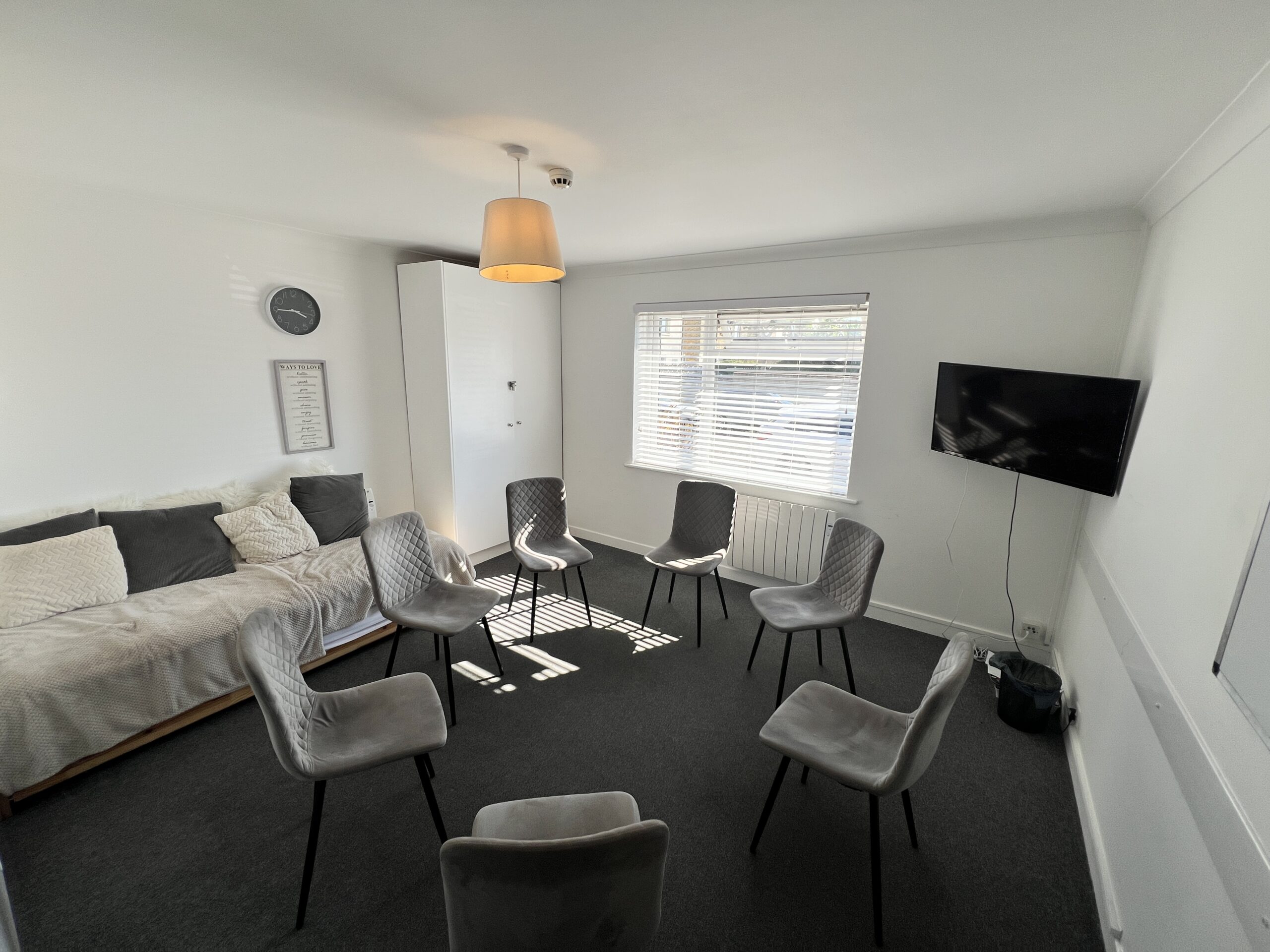
Group therapy is part of the programme every morning. It provides a space to discuss your experiences and listen to other people who are working through their own difficulties with addiction.
The thought of speaking in a group can feel uncomfortable before you arrive. You do not need to turn up with a prepared story or know exactly what to say. Let the team know if you are worried about taking part.
Workshops and assignment sessions
Workshops are scheduled throughout the week. The subject matter can change, allowing the programme to cover different aspects of addiction and recovery.
Assignment sessions provide time within the programme for individual recovery work to be brought into the group. The example timetable includes several named assignment slots; names have been removed here to protect clients’ privacy.
Mindfulness and DBT skills
This example week includes an afternoon of dialectical behaviour therapy, or DBT, skills and mindfulness on the beach.
DBT skills focus on areas such as managing emotions and handling difficult situations. Mindfulness involves paying attention to the present moment. The timetable describes a skills session, rather than a full course of DBT.
Yoga and art
Saturday morning includes yoga, while Friday afternoon includes an art group. These sessions bring variety to the week and offer ways to participate beyond talking and written work.
Progress and community sessions
The week includes time to review progress, alongside a community group. These give space within the programme to reflect on how treatment and day-to-day life at the clinic are going.
Recovery meetings and former client shares
The evening programme includes Alcoholics Anonymous and Cocaine Anonymous meetings, alongside workshops.
Monday’s former client share offers an opportunity to hear from someone who has previously been through treatment. Their experience is their own, but hearing about life after rehab can help make the next stage feel more tangible.
What happens at the weekend
Treatment continues at the weekend. Saturday includes morning group therapy, yoga and workshops.
Sunday combines the usual morning structure with check-in and meditation, a family visiting slot, and time allocated to a walk, free time and aftercare. If you would like someone to visit, speak to the team about the arrangements before making plans.
Is there time to rest?
The timetable includes gaps between activities, as well as meals and time before the evening programme. Every part of the day is not filled with a session.
If you are concerned about how you will manage the programme, particularly when you first arrive or if you need detoxification, speak to the clinical team. The example timetable does not replace your individual care plan.
Before you come to stay
You do not need to have everything worked out before contacting us. Understanding the daily routine is a useful place to start.
If you are considering a stay at The Lighthouse Clinic, our admissions team can talk you through the current programme, explain the assessment process and answer practical questions about coming into treatment.