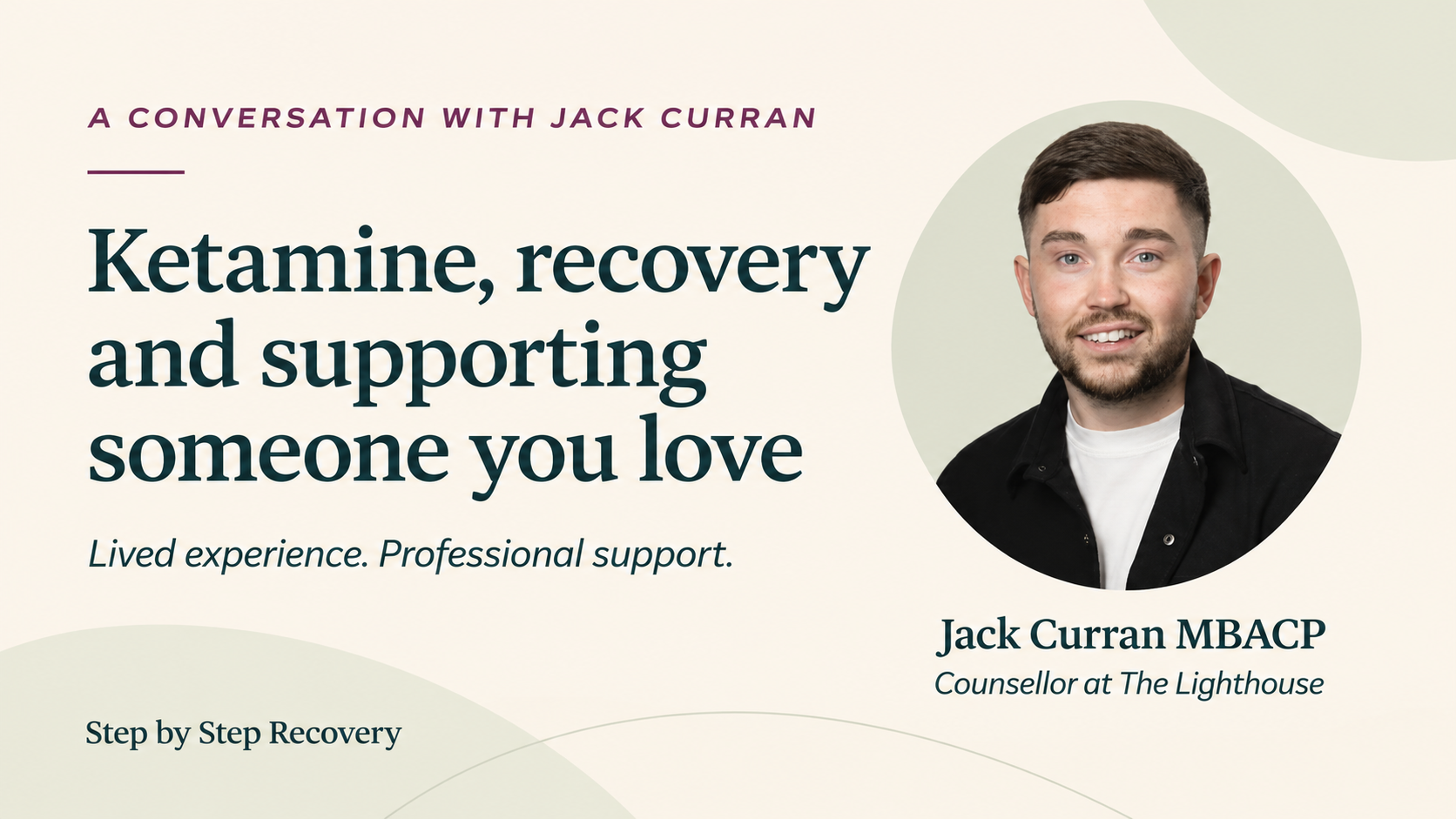


Lighthouse counsellor Jack Curran on his own recovery and how he helps others.
Jack Curran told The Guardian he started taking ketamine after an injury at 18. It eased his pain and helped quieten his thoughts. Later, he was taking it to get through bladder pain the drug itself was making worse. Today he’s a qualified counsellor at The Lighthouse in Essex. If you’re frightened of what will happen when you stop, that’s a conversation you can have with him.
Jack started here as a volunteer, then worked in recovery support. Step by Step supported him while he trained as a counsellor. Jack Curran MBACP holds a Level 3 qualification in Counselling Skills and a BACP-accredited Level 5 Higher Diploma in Counselling. He is now studying for a master’s in Psychodynamic Counselling and Psychotherapy.
Hear more from Jack
Explore Jack’s media interviews and podcasts · Find Jack on TikTok @addicted.333
If you’re worried about your teenager
If your teenager used to take ketamine with friends and has started taking it alone, pick a quiet moment to ask what’s changed. You might say, “What does it help with when you’re on your own?” If they say it helps them switch off, ask what’s been on their mind lately.
Among the first 60 patients at Alder Hey’s ketamine bladder clinic, the average age at referral was 14½. If your child is under 18, they can speak to their GP or you can find a local young people’s drug and alcohol service through FRANK.
What difference does your own experience make in the counselling room?
I remember being in and out of the bath at night trying to get comfortable. By morning I’d be thinking about taking ketamine again. Someone could have explained the damage to me in detail and I’d still have had the same question. How am I going to get through tonight?
So if you tell me ketamine is the only thing that helps, I’d want to hear what last night was like. Were you in pain? Were you frightened? What happened when you tried to wait a bit longer before using? I know what my answer would have been. I need to hear yours.
What did training change about the way you help someone?
It taught me to notice when I’m filling in the gaps myself. Say you tell me you always use when you get home from work. I might hear that and assume you’re trying to unwind. But perhaps that’s the first time all day you’ve been alone, or you’ve been holding on until you can use the bathroom at home. I’d ask you to take me through yesterday, from putting your key in the door. What you tell me changes what we work on together.
What if I’m too embarrassed to talk about my bladder?
You can start with the part you can say out loud. If you’ve been up most of the night going to the toilet, that’s enough to start a conversation. In counselling we can talk about what the pain or embarrassment does to your urge to use. A doctor can assess the symptoms themselves. If you’re worried you’ll leave something out at the appointment, we can write it down together.
What might we work on before I go home?
We might start with the evening you’re most worried about. Say it’s Friday. Your mates will be out, someone will message and you know how easy it would be to say yes. We can talk through the bit where you still have a choice. Who would you feel able to ring? What would you actually say? If you like, we can practise that conversation here. It helps to find words you’d be willing to use when you’re on your own.
I went back to rehab after I’d already been twice. I know how hard it was to tell my dad I needed more help. If you do use again, I’d want you to be able to pick up the phone and tell someone what happened. That gives us something specific to come back to.
What could someone close to me do?
It can be as simple as saying, “I heard you getting up all night. How are you feeling this morning?” Then give them time to answer. If they’re worried about seeing a doctor, offer to sit with them while they ring. There’s also support for families when someone is finding it hard to accept help.
Getting help with ketamine
If you see blood in your urine, even a small amount, ask for an urgent GP appointment or contact NHS 111. You can also contact your local drug service directly. For a confidential conversation about residential ketamine addiction treatment for adults at The Lighthouse, call 0800 170 1222.
Jack’s story in the media
Listen to Jack
The Guardian · Today in Focus
The rise of ketamine addiction in the UK.
Altered Attitudes · Life After Ketamine
Jack talks about using again after rehab.
Follow Jack’s story on TikTok
Jack also shares his experience on TikTok.
Further coverage
The Daily Mail investigation names Step by Step Recovery as Jack’s workplace. Further coverage includes the Daily Mail health report, The Sun, WalesOnline and People. WRD News featured Jack in December 2024 and July 2025.